
QIE Machinery
QIE Machinery
QIE Machinery
QIE Machinery

Soybeans are used as raw materials to obtain leaching crude soybean oil through pre-treatment and leaching processes, and high-temperature soybean meal, low-temperature soybean meal, high-temperature animal feed soybean meal are obtained according to different pre-treatment and leaching processes.
30-1000 TPD soybean oil solvent extraction line utilizes a series of specialized equipment to process pre-treated soybeans with a solvent (typically hexane) to maximize oil yield. Key components include an extractor, a desolventizer-toaster for the meal, and systems for solvent recovery and oil refining.
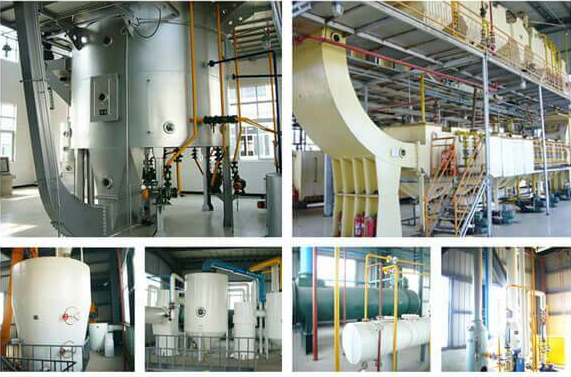
Soybean oil extraction is the foundation of modern edible oil manufacturing, and a well-engineered plant typically integrates four major stages: pretreatment, mechanical pressing, solvent extraction, and refining. In industrial facilities handling 30–1,000 tons per day, process design strongly influences yield, energy consumption, and overall investment structure.
Before extraction, soybeans must be physically altered to maximize oil release and protect equipment.
Cleaning: Vibrating screens, magnetic separators, and de-stoners remove dirt, stones, and metal.
Cracking & Dehulling: Beans are cracked into 4–6 pieces, and hulls (outer shells) are removed via air separation to improve oil yield and meal protein quality.
Conditioning (Softening): Cracked beans are heated (approx. 60–80°C) to adjust moisture and increase plasticity.
Flaking: Conditioned beans are rolled into thin flakes (0.25–0.35 mm). This increases surface area for the solvent to penetrate.
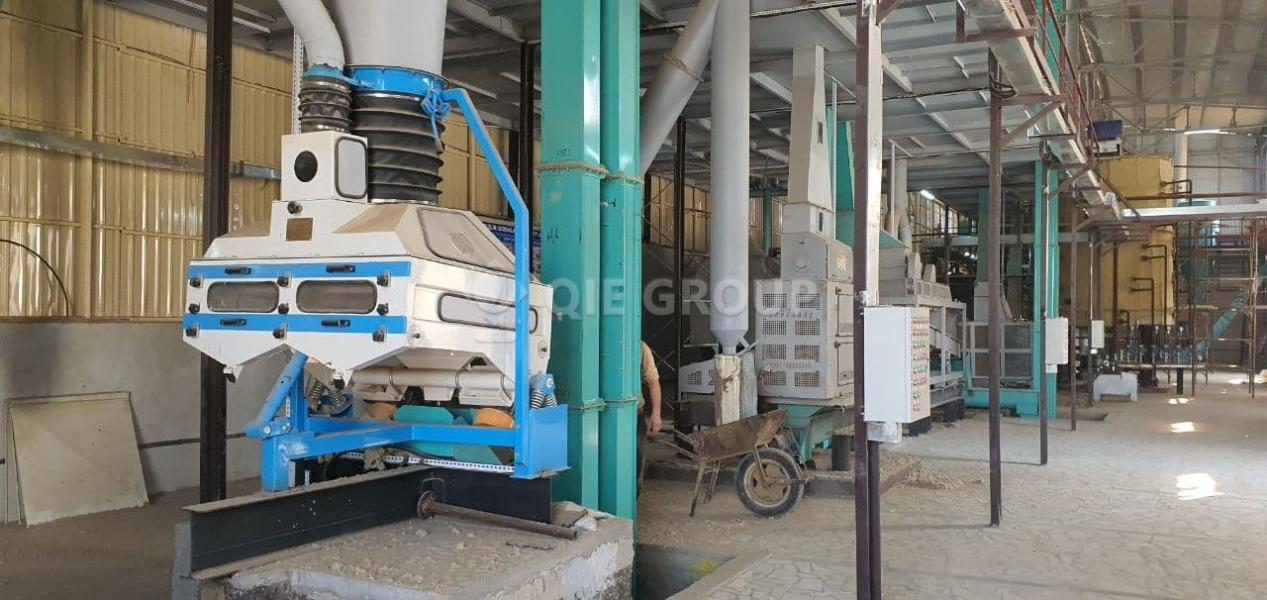
Well-designed pretreatment ensures stable flakes, consistent moisture, and minimal nutrient damage. Plants processing 200 TPD or more often adopt variable-frequency conveyors and magnetic separators with 8,000 Gauss strength. These engineering controls maintain uniform flow and reduce manual checks by more than 30%. They also stabilize the extraction system, which depends heavily on predictable flake quality.
Softening equipment equipped with automatic temperature control maintains ±2°C variation, reducing flake breakage by 10–15% and increasing extraction yield stability.
Industrial-scale plants typically use chemical extraction, though mechanical options exist for smaller operations.
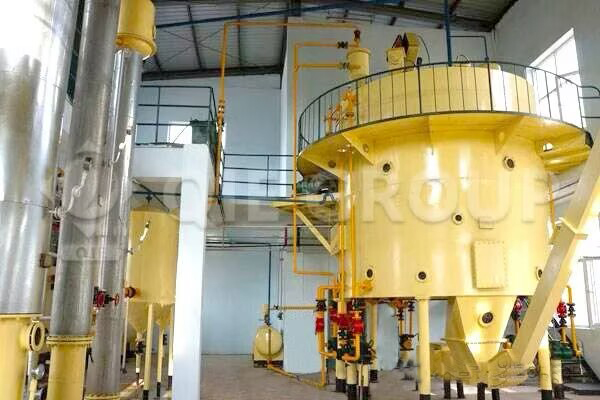
Solvent Extraction (Common Industrial Method): Soybean flakes are soaked in a solvent, typically hexane, which dissolves the oil to form a mixture called miscella.
Yield: Recovers up to 98-99% of the oil.
Separation: The miscella is heated to evaporate the hexane, which is then condensed and recycled. The remaining solid is “wet meal”.
Desolventizing: The wet meal is heated in a DTDC unit (Desolventizer-Toaster-Dryer-Cooler) to remove residual solvent, leaving behind soybean meal for animal feed.
The solvent extraction line is a continuous process involving several stages and equipment to extract the oil and recover the solvent efficiently.
Specifications
Residual Oil in Meal: Typically less than 1%.
Solvent Loss: Solvent consumption is generally around ≤1.5-3 Kg of hexane per ton of soybeans processed.
Steam Consumption: Approximately 280-320 kg/ton of soybeans at 0.8MPa.
Electrical Demand: Generally ranges from 22-28 kWh/ton of soybeans.
Processing Parameters: Optimal solvent temperature is around 45–55°C, and residence time in the extractor is typically 60–90 minutes.
Mechanical Pressing (Expeller): Uses physical pressure to squeeze out oil. While natural and chemical-free, it is less efficient, leaving 6–7% residual oil in the cake.
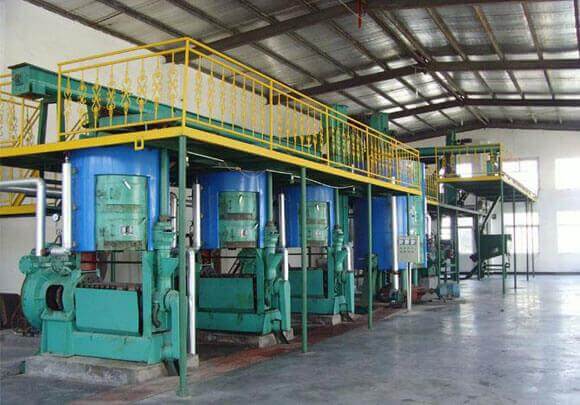
In fact, the mechanical pressing method and the solvent extraction method are only two different oil production processes, and the different characteristics of oil production raw materials determine different oil production processes.(You may also interested in Set Up a Full Soybean Oil Processing Plant >>)
The processing technology of pressed oil is the physical pressing method, while the processing technology of extracted oil is the chemical extraction method, and it adopts edible-grade solvent.
Pressed oil retains the original flavor of the oil to the greatest extent, with complete color, aroma and taste, and retains various nutrients in the oil; while the extracted oil is colorless and odorless, and some nutrients may be destroyed or removed after processing.
The two oil production processes, the mechanical pressing method and the solvent extraction method, are suitable for different raw materials. Generally speaking, most of the raw materials with high oil content adopt the pressing method, such as sesame and peanuts. The extraction method is suitable for most raw materials. For some raw materials with low oil content, such as rice bran, the direct extraction process is adopted; for some raw materials with high oil content, such as peanuts, the process of first pressing and then extracting can also be used to obtain more oil and good economic benefits!
Crude oil from extraction contains impurities (phospholipids, free fatty acids, pigments) and must be refined to be edible.
Degumming: Adding water or acid (citric/phosphoric) to remove phospholipids (gums), which can be processed into lecithin.
Neutralization: An alkali (sodium hydroxide) is added to remove free fatty acids (FFA) as soapstock.
Bleaching: The oil is mixed with bleaching clay to absorb pigments and clarify the color.
Deodorization: Steam distillation under high vacuum (230–260°C) removes volatile compounds responsible for odors and flavors.
Winterization (Optional): Chilling the oil to remove waxes that cause cloudiness at cold temperatures.
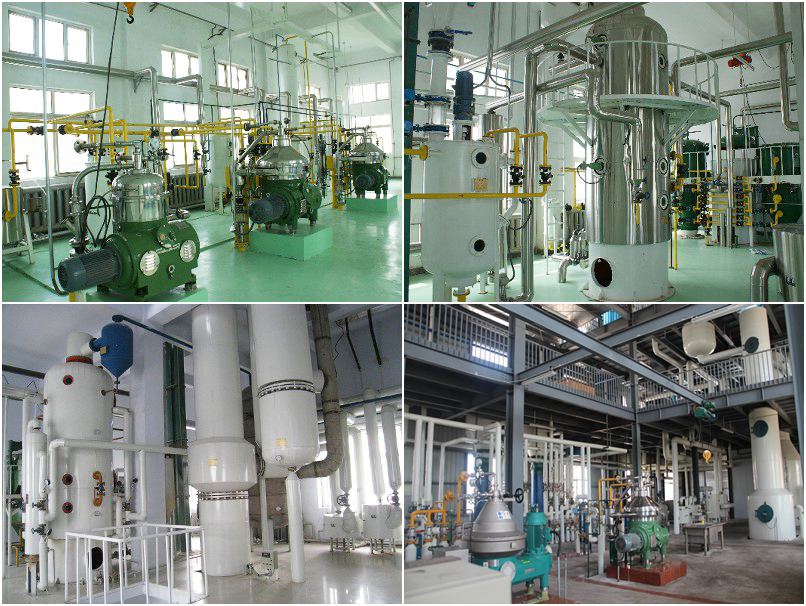
QIE Machinery have gained rich experience in setting up soybean oil processing plant both in small scale and large scale. We can supply the exclusively service for your needs and requirements. You are very welcomed to contact us for any questions! We are looking forward to be your soybean oil processing machine partner!
When is solvent extraction the better choice compared to mechanical pressing?
Solvent extraction is ideal for large-scale operations (capacities over 30 TPD) and for processing oilseeds with low oil content (typically less than 20%, like soybeans). It offers a much higher oil yield, leaving less than 1% residual oil in the meal, compared to 6-10% for mechanical pressing.
What is the primary solvent used?
The most common solvent used in industrial soybean oil extraction is n-hexane, a petroleum derivative valued for its efficiency and low cost.
What are the main stages of the process?
The process is generally divided into four main sections: soybean pretreatment (cleaning, flaking), solvent extraction, wet meal desolvation/toasting, and miscella (mixed oil) evaporation/stripping with solvent recovery.
Is soybean pretreatment necessary for solvent extraction?
Yes, pretreatment is a crucial first step for any extraction method. It involves cleaning, cracking, dehulling, conditioning, and flaking the soybeans to prepare them for optimal solvent penetration and maximum oil release.
What is the typical oil recovery rate?
Modern solvent extraction lines are highly efficient, typically achieving an oil recovery rate of over 98%, often leaving less than 1% residual oil in the final meal.
How much does a 30-1000 TPD line cost?
Costs vary significantly based on capacity, level of automation (e.g., Siemens PLC control systems), manufacturer, and included ancillary equipment (e.g., refining sections). The initial investment is substantial, making it best suited for large-scale operations to be cost-effective.
Can the plant process other oilseeds?
Yes, while designed for soybeans, the line can often be adapted to process other low-oil-content seeds, or pre-pressed cakes from high-oil-content seeds like sunflower or peanuts, by adjusting specific parameters.
Whether you contact us by phone, email, or leave a message online, we will provide you with comprehensive and high-quality services.
Phone: 0086-13949113983
WhatsApp:
Email: qiea@oilpresses.org
Address: No.352 Lianhua Street, Hightech Industrial Development Zone, , Zhengzhou City,Henan Province, China
