
QIE Machinery
QIE Machinery
QIE Machinery
QIE Machinery

A Soybean Solvent Extraction Oil Production Line is the industry standard for large-scale soybean processing, favored for its ability to reduce residual oil in the meal to less than 1%. Because soybeans have a relatively low oil content (15–22%), mechanical pressing alone is often less economical for high-volume operations.
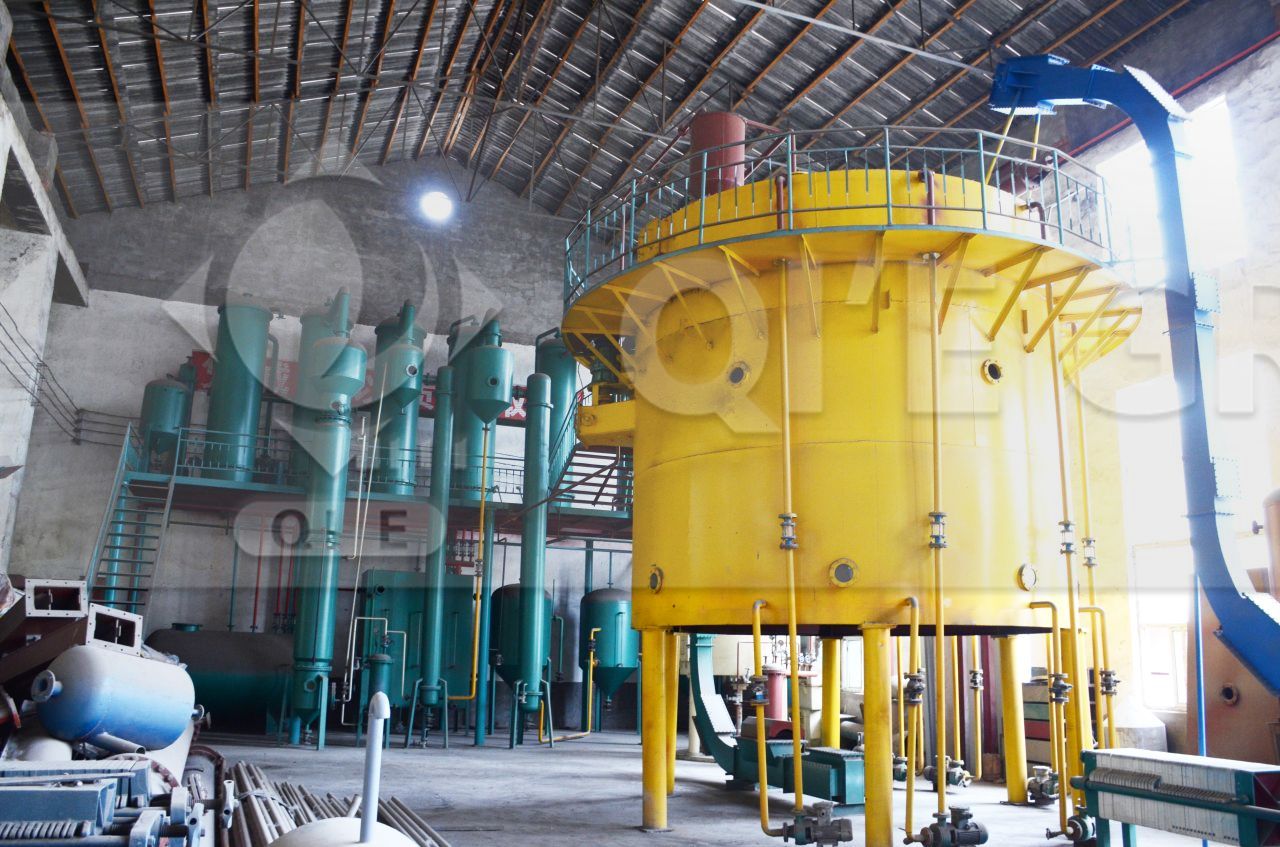
The Solvent Extraction Process is a chemical method used to recover oil from oil-bearing materials (like soybeans, sunflower seeds, or rice bran) using a liquid solvent. In the industry, n-hexane is the most common solvent due to its high solubility in oil and low boiling point, which makes it easy to recover.
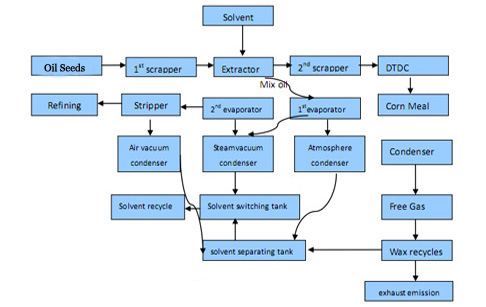
Oil Extraction Section → DTDC Desolventizer Toaster Dryer Cooler → Oil Filtration Section → Evaporation and Separation Section → Solvent Condensation and Recovery System → Paraffin Absorption System → Water Solvent Separation and Recovery System → Automatic Control System
Oil Extraction Section
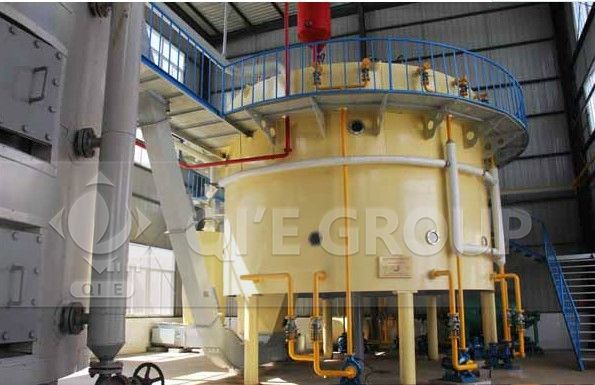
Customers can choose rotocel extractor or drag chain extractor based on their requirements. For different raw materials, grid trays clearance and grid trays arrangement will be properly adjusted to ensure that the oil residues in seed meal is minimum. In addition, liquids in seed meal will be completely drained off, which contributes to minimum solvent content. As a result, the burden imposed on desolventizing device in sequential process will be greatly alleviated, which further reduces steam consumption.
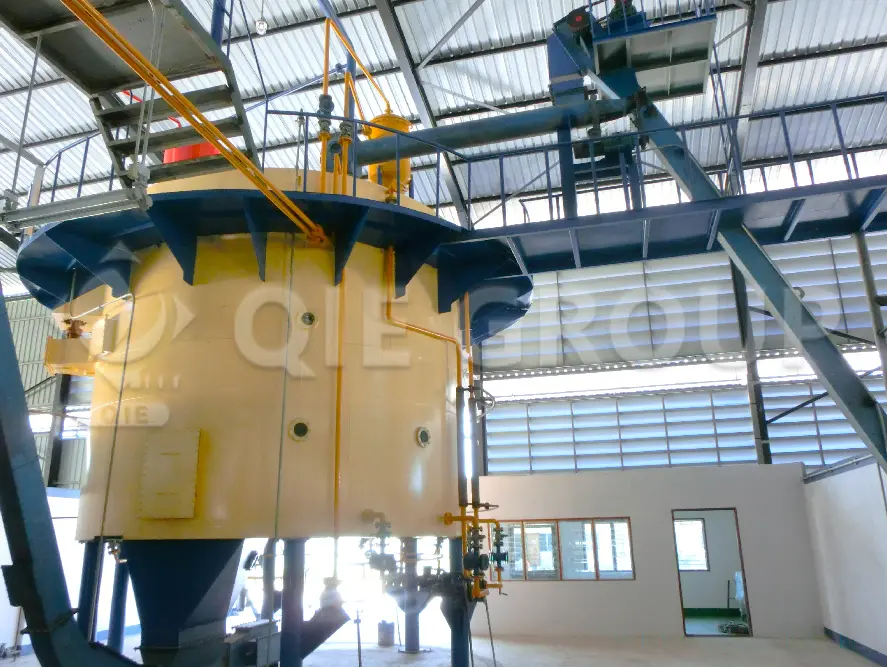
DTDC Desolventizer Toaster Dryer Cooler
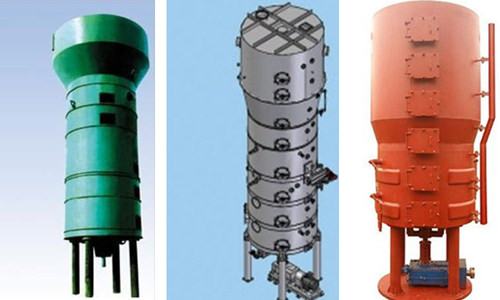
The machine consists of pre-desolventizing layer, heat exchange layer, desolventizing layer, heat recovery layer, drying layer and cooling layer. Materials levels at each layer can be automatically controlled. Full utilization of secondary steam reduces steam consumption. Mixed steam will be used to heat miscella after meal foam removal, which further saves energy. The process features thorough desolventizing, light yellow meal, complete passivation of antinutritional factors, short time required for high temperature desolventizing and low loss of meal NSI.
Oil Filtration Section
The process is designed to filter out solid impurities prior to miscella evaporation. Devices used include high pressure delivery pump, centrifugal separator and filter with slagging function. Optimum filtration effect can be achieved by combination of centrifugal separation precise filtration. Since the filter is able to remove slags automatically, no manual operation is required.
Evaporation and Separation Section
Devices used in the process contains evaporator, disc stripping tower, flash separator, heat exchanger and vacuum unit. Under a vacuum and negative pressure condition, solvent in the miscella will be evaporated and separated by rising film evaporation and direct stripping. After thorough desolvation, bright color leached oil will be obtained. To ensure system stability and reliability, an automatic PLC control system is adopted for control of evaporating temperature and vacuum level. Both mixed steam and power steam for vacuum pump will be sufficiently used for evaporation. Heat transfer and mass transfer between cool and hot medium furthers reduces steam consumption. In addition, lipid oxidation can be prevented as well.(Read More: Soybean Oil Solvent Extraction Plant in Ghana >>)
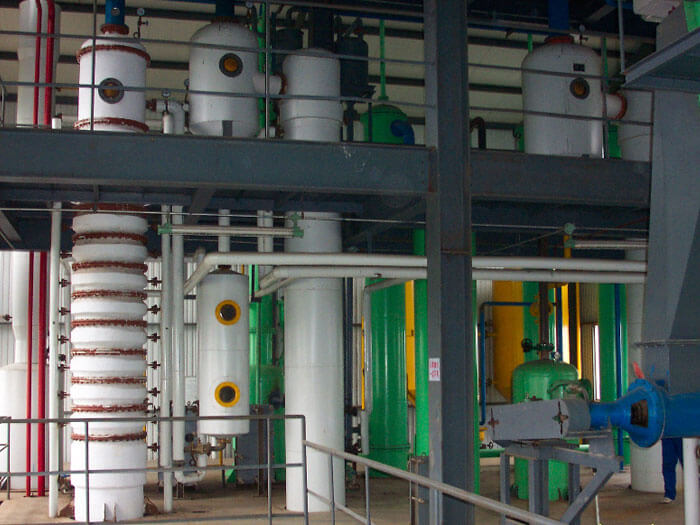
Solvent Condensation and Recovery System
The system mainly consists of condenser and circulating cool water system. Under the vacuum condition, condensable solvent steam is condensed into liquids for cyclic utilization through dividing-wall heat transfer. Multiple-pass structure of the condenser and proper settings of flow rate and speed of circulating water will greatly improve efficiency of condensation and separation and largely reduces investment capital and operating cost. In addition, tube plates, baffle plates and heat exchange tubes are all made of stainless steel, which facilities cleaning and withstands corrosion. Moreover, great condensation effect and long service life can be fully ensured.
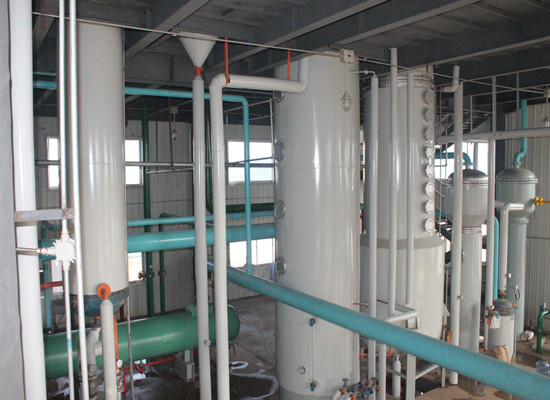
Paraffin Absorption System
The system consists of Paraffin absorption column,Paraffin desorption column,hear exchanger,storage tank, punp,Exhaust gas blower and so on. It is able to recycle more than 98 percent solvent in the exhaust gas, which reduces solvent loss and protects environment at the same time.
The system makes use of food-grade liquid paraffin to adsorb solvent gas mixed in exhaust gas. The solvent steam will be distilled and separated with the help of superheated steam. Then the solvent steam obtained will be recycled through condensation. To ensure stable absorption efficiency and system reliability, automatic control devices are applied to control important parameters such as flow rate, temperature and pressure.
Water & Solvent Separation Section
The system consists of solvent-water separator, boiling tank,and fresh solvent pump. It separates water from solvent based on the principle that water repels solvent and two liquid layers will be formed in their mixture. To ensure stability and reliability of the system, automatic control devices are applied to control important parameters such as flow rate, temperature and material level.
Automatic Control System
In our production lines, we make use of Siemens PLC control system, which is one of mainstream automatic control systems in today`s industry. The efficient, stable and advanced DCS control system consists of operation station, control station and communication network. We utilize high-speed and large-capacity S7-400 series PLC at the control system, large-screen LCD at the operation station, WINCC 7.0 industrial control software as monitoring software and PROFIBUS filed bus network for communication.
| Index | Typical Value |
|---|---|
| Residual oil in meal | ≤1% |
| Solvent consumption | ≤4 kg/ton raw material |
| Residual solvent in crude oil | ≤50 ppm |
| Residual solvent in meal | ≤300 ppm |
| Capacity range | 100–6000 tons/day (industrial scale) |
| Steam consumption | ~200 kg/ton material (0.8 MPa steam) |
| Electricity consumption | 22–28 kWh/ton material |
This involves extracting oil through mechanical pressure without additives, resulting in high-quality crude oil with complete color, aroma, and flavor. It retains the nutritional components of soybeans but has a lower smoke point and oil yield, making it relatively expensive. This method is flexible and suitable for small to medium-sized edible oil processing plants.
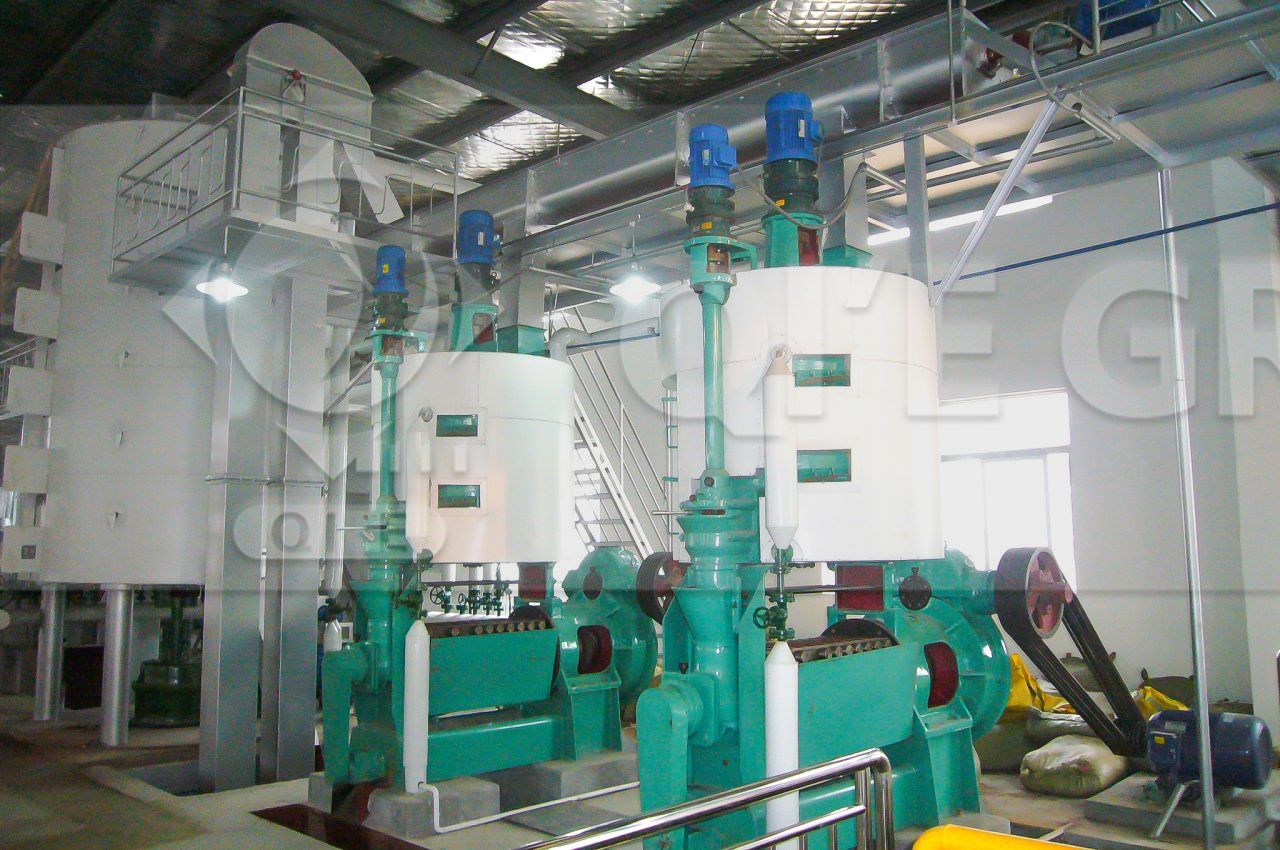
This uses a solvent to extract the oil, which then requires high-temperature evaporation and condensation to separate the solvent from the oil. The refined oil has fewer impurities, higher purity, and a higher smoke point, making it suitable for high-temperature cooking. This method yields a higher oil output and is more cost-effective.
The two oil production methods have different application scenarios and advantages and disadvantages, please contact us to provide you with a more suitable and complete soybean oil production line solutions.
What are the main sections of the production line?
Pretreatment Section: Prepares soybeans by cleaning (removing impurities), cracking (breaking into pieces), softening (adjusting moisture/temp), and flaking (creating thin flakes to increase surface area).
Extraction Section: The core phase where flaked soybeans are soaked in a solvent (usually n-hexane) to dissolve and extract the oil.
Desolventizing Section (D.T.D.C.): Removes and recovers solvent from the wet meal using heat and steam, resulting in high-protein soybean meal for animal feed.
Evaporation & Stripping Section: Separates the solvent from the “miscella” (oil-solvent mixture) using different boiling points, leaving behind crude soybean oil.
Solvent Recovery: Condenses and recycles the evaporated solvent back into the extraction process for reuse.
Why use solvent extraction instead of pressing?
Higher Yield: Solvent extraction captures up to 98% of the oil, while mechanical pressing may leave 6–10% residual oil.
Efficiency at Scale: It is the standard for large-scale operations (typically over 20–30 tons per day) due to lower per-ton production costs.
Meal Quality: The resulting meal has a higher protein concentration because nearly all oil is removed, making it more valuable for livestock feed.
What is the most common solvent used?
N-hexane is the universal industrial choice due to its high oil solubility, low boiling point (69°C) for easy recovery, and cost-effectiveness.
What is the recommended production capacity?
While smaller batches can be pressed, solvent extraction is generally recommended for capacities exceeding 30 tons per day to justify the higher initial investment in specialized equipment
What solvent is used? Is it safe?
n-Hexane (food-grade 6# solvent); boiling point 67–71°C, easy to recover.
Safety: Strictly controlled; final crude oil residual solvent ≤10 ppm, meal ≤500 ppm (meets national standards).
Recycling: Closed-loop system; recovery ≥99.8% to minimize consumption & emission.
How to ensure meal quality?
DTDC control: Proper desolventizing (residual solvent ≤500 ppm), toasting (improve protein digestibility), drying (moisture 12–13%).
No overheating: Protect protein; avoid burnt meal.
Whether you contact us by phone, email, or leave a message online, we will provide you with comprehensive and high-quality services.
Phone: 0086-13949113983
WhatsApp:
Email: qiea@oilpresses.org
Address: No.352 Lianhua Street, Hightech Industrial Development Zone, , Zhengzhou City,Henan Province, China
